If you follow today’s business and tech narratives, one topic has quietly faded: climate.
Five years ago, climate change was everywhere.
On conference stages. In boardrooms. In investor decks.
Today? Much less so.
Here are two data angles that make this impossible to ignore.
- Take TED Talks, long a reliable mirror of what society cares about the most. Mentions of “climate change” peaked around 2020–2021, and have been declining ever since.
- At the same time, investor sentiment has shifted just as sharply. Sustainability-focused mutual funds recorded a third consecutive year of outflows in 2025, according to Morningstar.
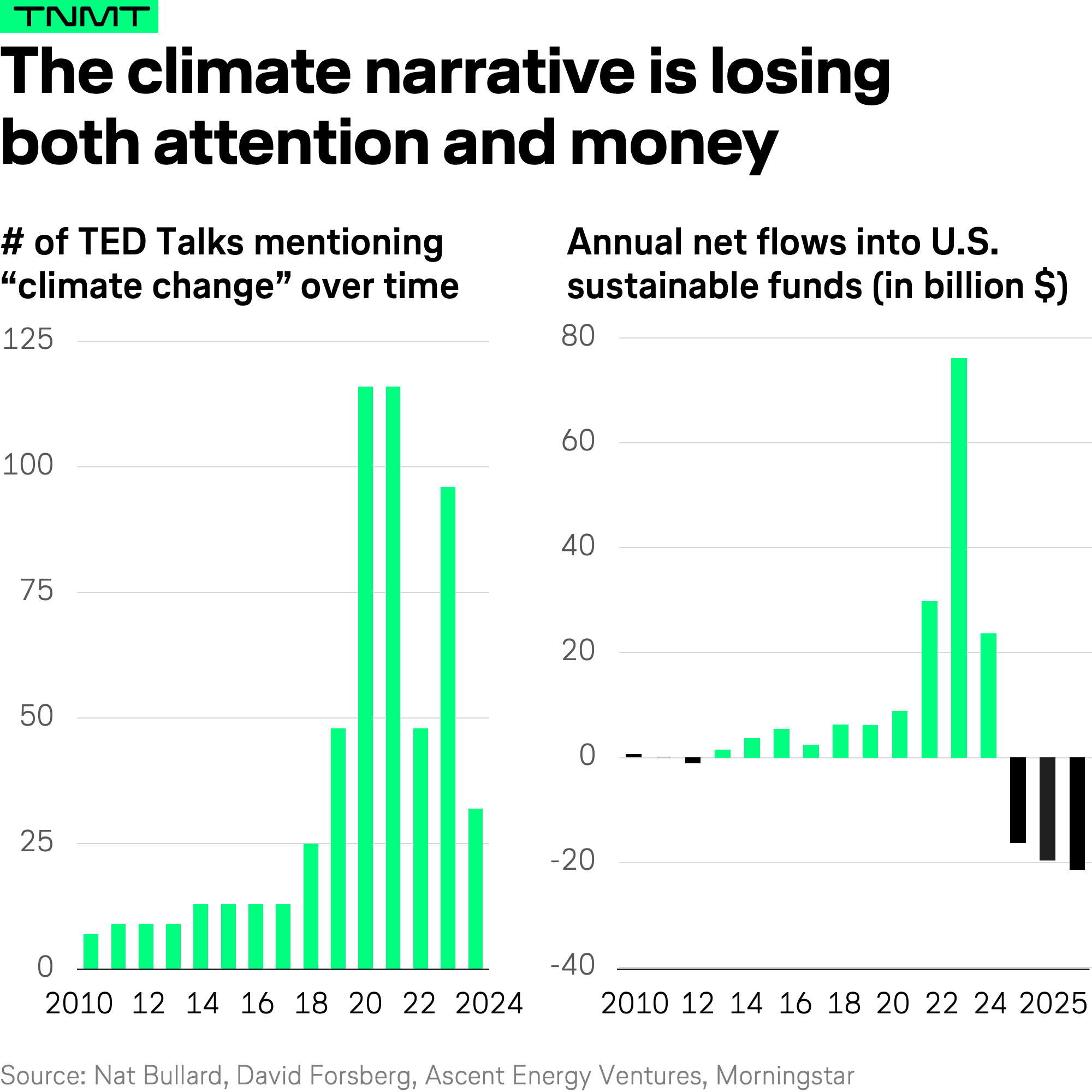
What this means: Public attention is down, and capital is following.
And where attention and capital go, corporate priorities tend to follow as well.
According to BCG’s analysis of more than 6,000 earnings calls, executive mentions of ESG and decarbonization declined by over 20% in Q4 2025 vs. the year before.
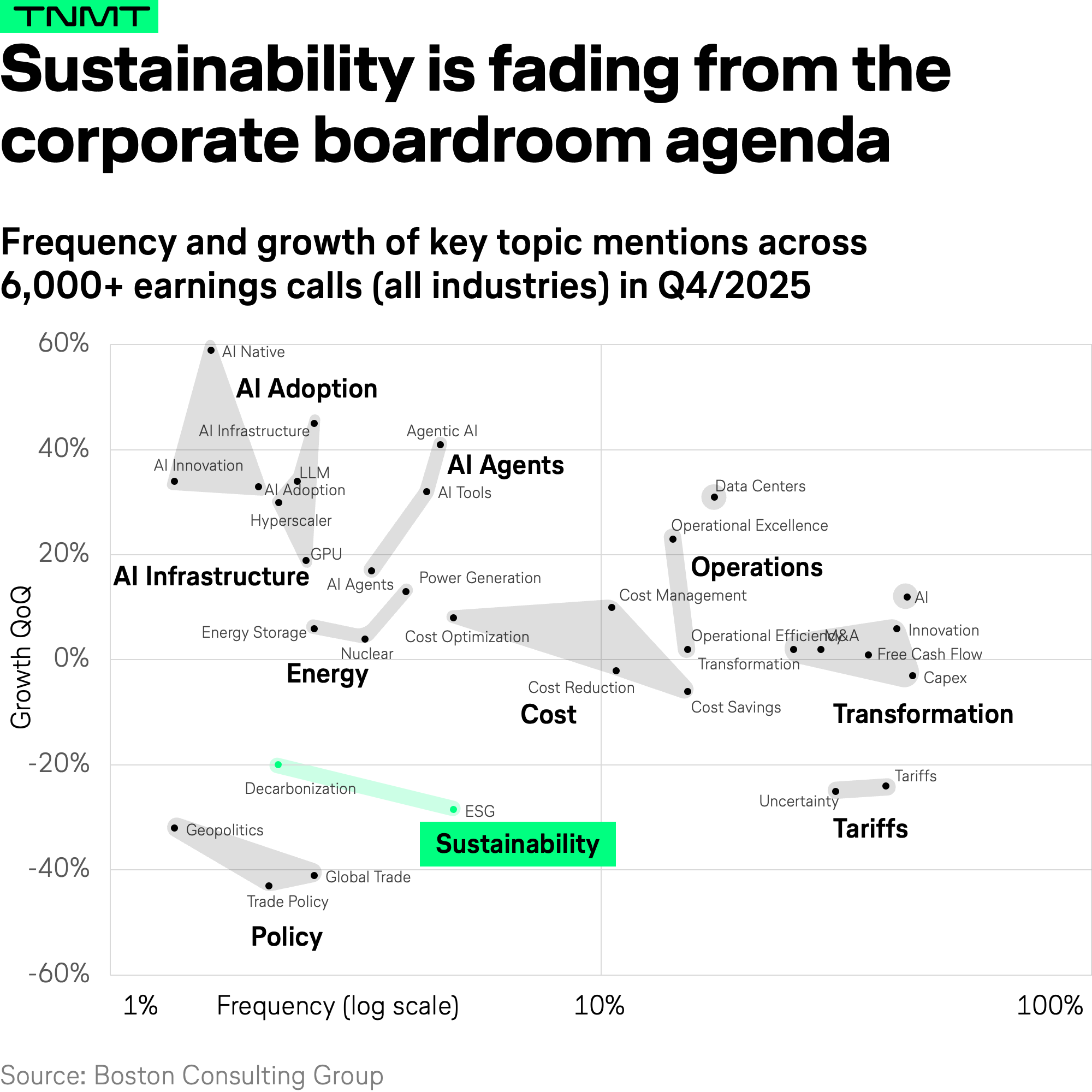
What replaced it?
Mostly AI.
As we showed in our last TNMT Newsletter edition, AI has taken over the business narrative.

The same story is playing out in aviation
The same shift is now visible in aviation and the wider Travel and Mobility Tech industry.
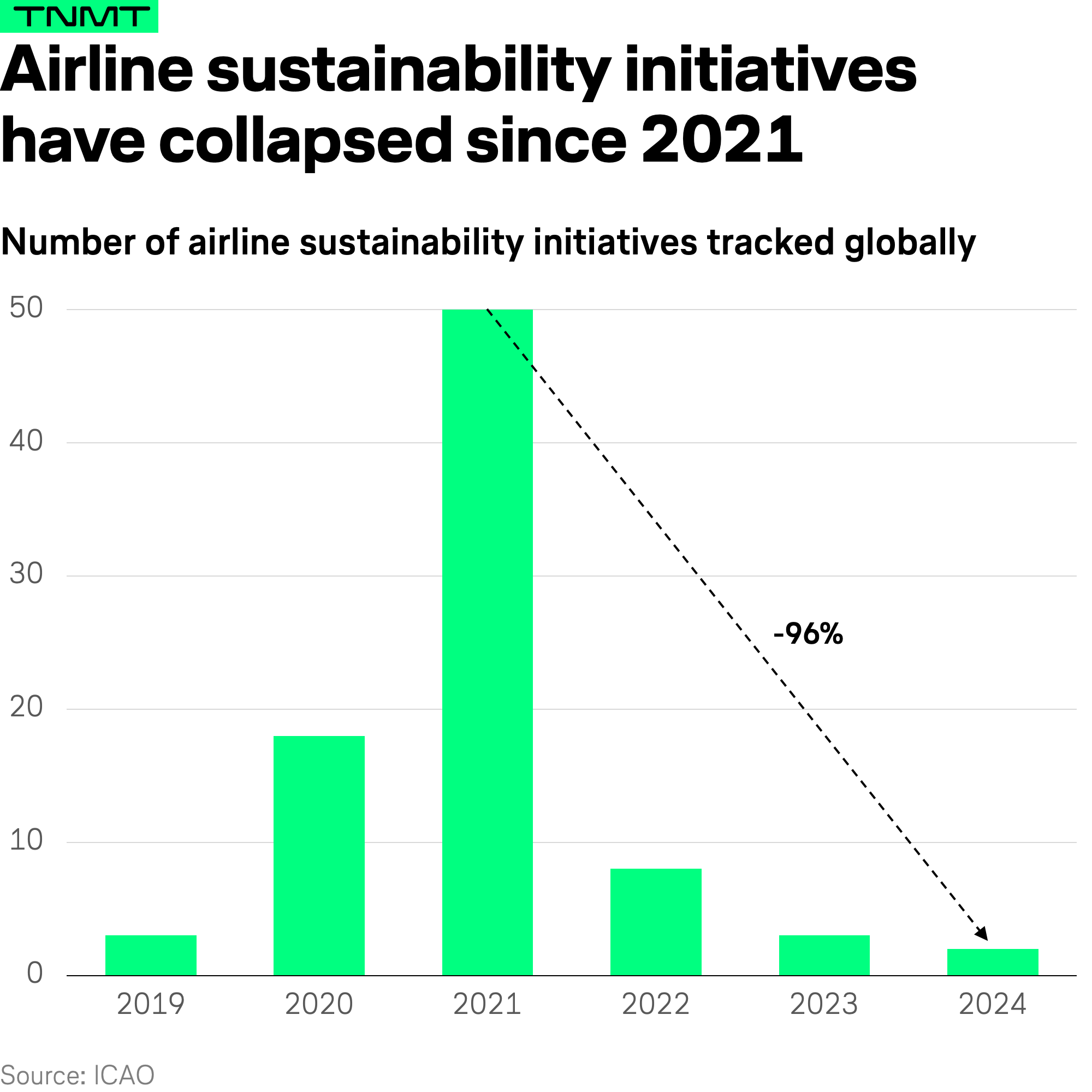
According to the International Civil Aviation Organization (ICAO), the UN body responsible for coordinating global aviation standards and policy, the number of meaningful airline initiatives aimed at reducing CO₂ emissions has dropped sharply.
- In 2021, ICAO tracked roughly 50 initiatives from airlines around the globe.
- By 2024, that number had fallen to fewer than 5.
- And in 2025, ICAO stopped tracking them altogether.
That, in itself, sends a message that doesn’t require further explanation.
In line with this deprioritization, airlines have started to quietly walk back their own commitments.
Take Delta Air Lines.
- As of April 2026, the airline reframed its 2050 net-zero target from a firm goal to a long-term aspiration.
- It also removed its interim target of reaching 10% Sustainable Aviation Fuel usage by 2030 from its website.
Delta is not an outlier.
Air New Zealand, Southwest, and others have taken similar steps, such as softening language, delaying targets, or removing milestones altogether.
Behind the headlines, real progress is happening
Now, if you thought this was turning into another rant about airlines abandoning climate ambitions, here comes the pivot.
Because it’s not.
It’s easy to get lost in the negative narrative. And yes, we’re aware of the irony of saying this as part of an airline group. But behind the charts, there’s also a more constructive story unfolding. And it starts with looking beyond words and initiatives to focus on actual emissions data.
Because on that front, the picture looks much more positive.
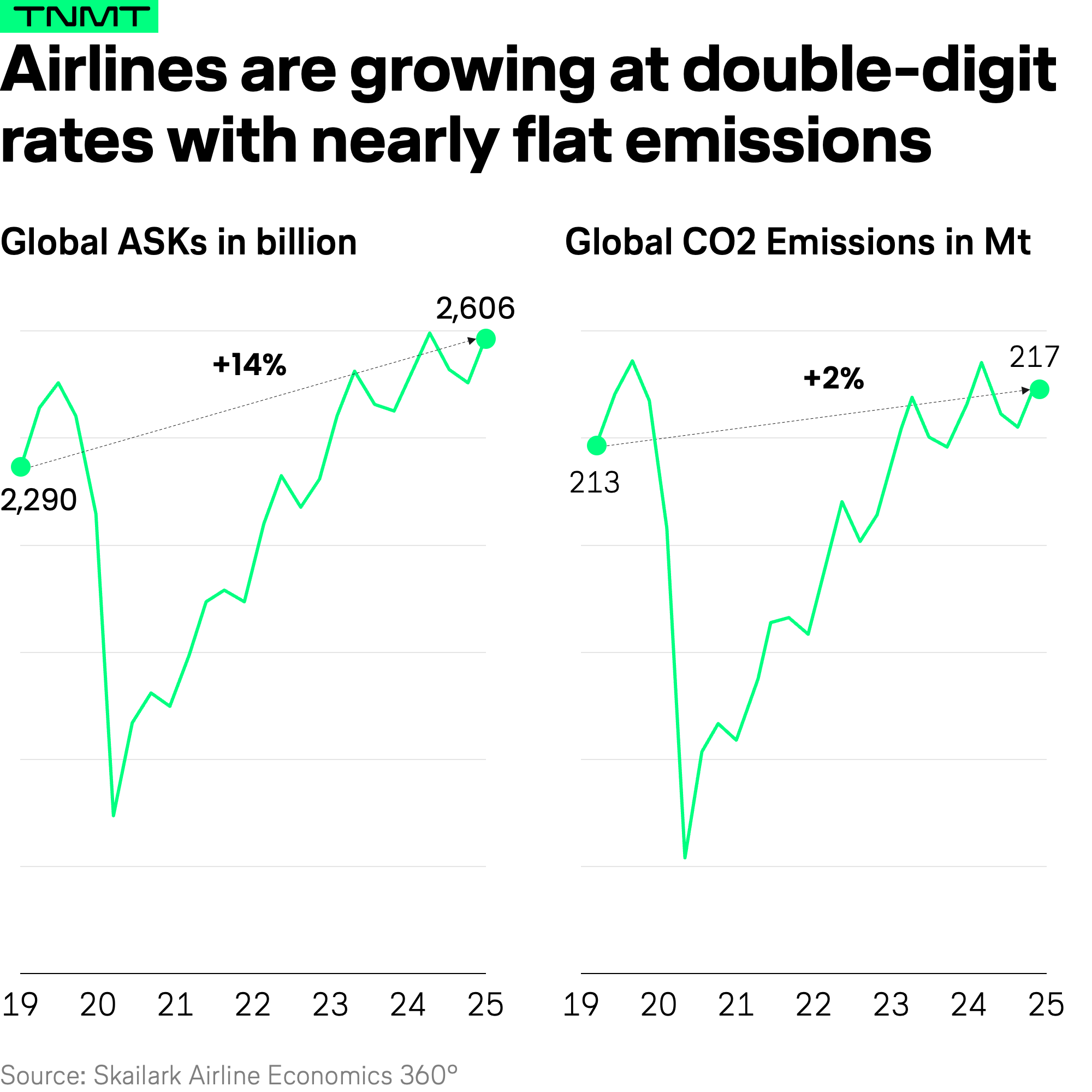
According to data from airline analytics provider Skailark, aviation has come surprisingly close to carbon-neutral growth in recent years.
Between 2019 and 2025:
- Global airline capacity (ASK) increased by +14%.
- In the same timeframe, CO₂ emissions, however, grew by just +2%.
What does that mean?
The industry has become significantly more efficient at transporting passengers, largely driven by newer, more fuel-efficient aircraft entering the fleet.
That’s the first lever.
The second one is more recent and even more unexpected.
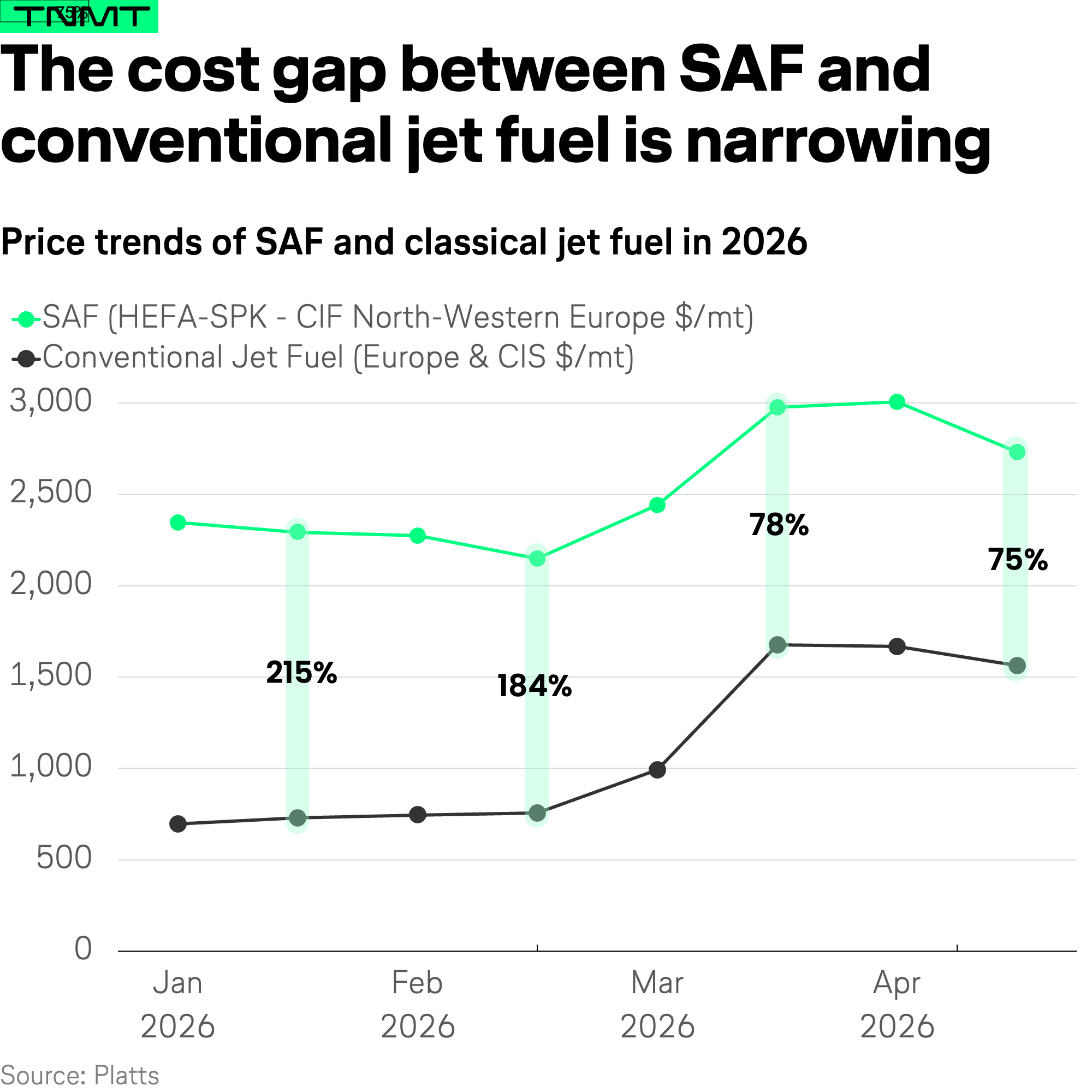
Following the geopolitical tensions in the Middle East and the resulting spike in jet fuel prices, something interesting happened:
- The price gap between conventional jet fuel and SAF narrowed.
- In other words: the biggest barrier to SAF adoption (its cost disadvantage) has started to shrink.
And that matters.
Because even small changes in relative economics can trigger disproportionate shifts in demand and investment.
This might not just be a temporary effect.
Even if geopolitical tensions ease, fuel prices are expected to remain elevated. According to World Bank forecasts, oil prices are projected to average around $86 USD per barrel in 2026, up significantly from roughly $69 USD in 2025.
Which brings us to the real takeaway of today’s newsletter.
While sustainability may have lost momentum in headlines, the underlying company ecosystem is still moving forward.
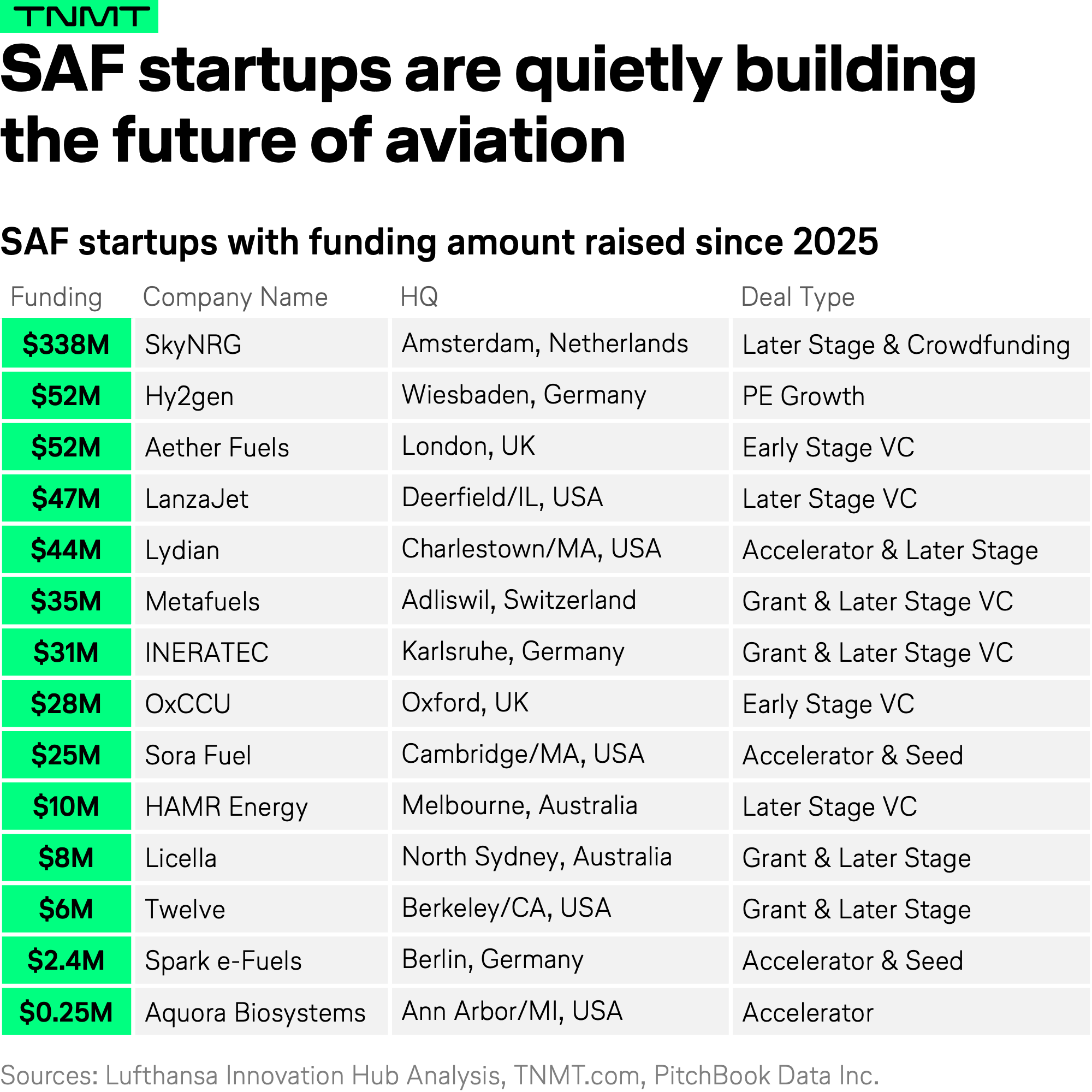
At TNMT, we’ve been tracking SAF-focused technology startups for close to a decade.
- They rarely make front-page news.
- But quietly, a group of highly specialized companies is scaling production, improving technology, and attracting capital.
If you work in aviation, this is a list worth paying attention to.
Because chances are, a few of these companies won’t stay niche for long.
They’ll become the bridge between aviation and the energy industry of the future.